 English


The surging volume of discarded household electronics, automotive circuit boards and scrapped industrial controllers pushes the global recycling sector to upgrade hardware constantly. Equipment for e waste recycling has become essential infrastructure for waste resource recovery factories across continents. Well‑configured equipment for e waste recycling can separate copper, aluminum, precious metals and non‑metal resin from electronic scraps safely and efficiently. More investors recognize long‑term profits and environmental value brought by professional equipment for e waste recycling.
Market Prospect of Equipment for E Waste Recycling
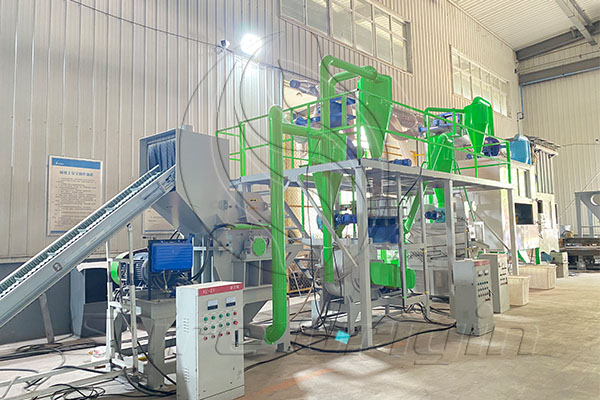
Governments worldwide keep tightening environmental laws on electronic waste disposal, directly driving rising demand for standardized equipment for e waste recycling. Traditional manual dismantling and chemical leaching are restricted by emission rules, making automated equipment for e waste recycling the mainstream choice for formal recycling plants. Abundant raw materials including old phones, laptops, PCB boards and home appliances create stable processing demands for equipment for e waste recycling. Buyers from Southeast Asia, Eastern Europe and the Middle East regularly inquire about customized equipment for e waste recycling. Small workshops choose compact integrated equipment for e waste recycling, while large industrial bases build whole production lines centered on heavy‑duty equipment for e waste recycling. In the next decade, the global market scale of equipment for e waste recycling will keep steady upward growth under the circular economy trend.
Manufacturing and Practical Operation of Equipment for E Waste Recycling
Producing durable and compliant equipment for e waste recycling requires high‑strength alloy steel, wear‑resistant blades, high‑precision electrostatic modules and sealed dust removal units. Manufacturers integrate feeding conveyors, coarse crushing devices, fine grinding machines and multi‑stage sorting systems into complete equipment for e waste recycling. Every finished set of equipment for e waste recycling undergoes load operation, dust leakage inspection and voltage adaptation debugging before shipment.
In daily production, workers feed pre‑disassembled electronic scraps into the inlet of equipment for e waste recycling. The whole process consists of shredding, pulverizing, air classification and high‑voltage electrostatic separation. The closed dust‑proof structure of equipment for e waste recycling reduces flying particles and prevents metal loss. Operators adjust running parameters via the central control cabinet, and equipment for e waste recycling can support long‑time continuous batch processing. The matched waste gas treatment component ensures the running of equipment for e waste recycling meets local environmental standards.
Core Strengths of Equipment for E Waste Recycling
First, high metal recovery efficiency is the most prominent advantage of equipment for e waste recycling. Physical separation technology raises resource utilization rate greatly compared with outdated processing methods. Second, eco‑friendly dry‑type processing mode of equipment for e waste recycling avoids chemical pollution and secondary waste. Third, modular design enables flexible expansion of equipment for e waste recycling according to growing production capacity. Fourth, easy maintenance and affordable spare parts lower the long‑term running cost of equipment for e waste recycling. In addition, equipment for e waste recycling can be customized on power supply, processing capacity and control language to adapt to different overseas work conditions.
To sum up, reliable performance and considerable economic benefits make equipment for e waste recycling a core investment project in the e‑waste treatment industry. As electronic waste keeps increasing globally, advanced equipment for e waste recycling will maintain a key position in sustainable resource regeneration.