 English


The rapid accumulation of global electronic waste drives strong market demand for resource recovery equipment, and the circuit board recycling machine has become core equipment for e‑waste processing factories worldwide. A well‑designed circuit board recycling machine can turn discarded mobile phone motherboards, computer circuit boards and television control boards into reusable copper, gold, silver and non‑metallic resin powder, creating stable economic benefits while lowering environmental pollution risks.
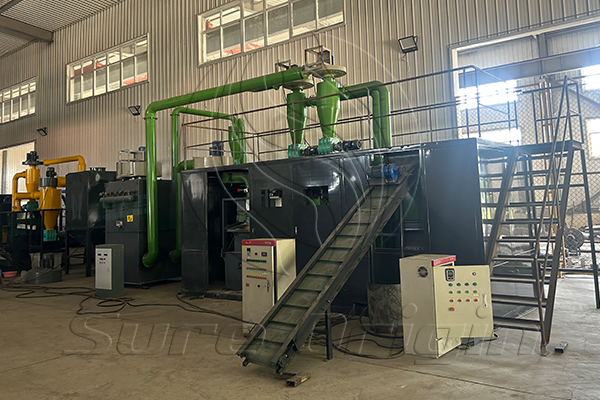
Bright Market Prospect of Circuit Board Recycling Machine
Governments across Europe, Southeast Asia and the Middle East are enforcing stricter e‑waste disposal regulations, which directly pushes more recyclers to purchase a complete circuit board recycling machine. Traditional chemical leaching methods face heavy environmental penalties, so the physical separation structure of the circuit board recycling machine gains greater market favor. As raw metal mining costs keep rising, investors prefer long‑term stable profits brought by the circuit board recycling machine. Small and medium‑sized recycling workshops tend to adopt compact‑type circuit board recycling machine, while large‑scale industrial plants order full automatic production lines based on the core circuit board recycling machine. In the next five years, the global trading volume of the circuit board recycling machine will maintain steady annual growth, supported by circular economy policies and rising precious metal prices.
Manufacturing and Standard Operation of Circuit Board Recycling Machine
Manufacturing a qualified circuit board recycling machine requires strict selection of wear‑resistant alloy steel for crushing blades and high‑precision electrostatic sorting modules. Professional factories assemble the feeding conveyor, coarse crushing unit, fine grinding chamber and multi‑stage sorting structure to form a complete circuit board recycling machine. Before delivery, every finished circuit board recycling machine undergoes load testing, dust sealing inspection and voltage adaptation debugging to fit different countries’ power standards.
In daily operation, workers put waste circuit boards into the feeding port of the circuit board recycling machine. The whole workflow follows three key steps: shredding, pulverizing and multi‑dimensional sorting. The built‑in dust removal system of the circuit board recycling machine controls flying particles effectively, making the whole processing process safe and standardized. Operators only need to monitor the running parameters on the control panel, and the circuit board recycling machine can finish continuous 24‑hour material separation.
Core Advantages of Circuit Board Recycling Machine
First of all, high recovery efficiency is the biggest highlight of the circuit board recycling machine. It can reach over 95% metal separation rate, far higher than manual sorting. Secondly, the dry physical processing mode of the circuit board recycling machine avoids chemical pollution, meeting international environmental certification standards. Thirdly, the modular design allows users to upgrade the circuit board recycling machine later according to production expansion needs without replacing the whole set of equipment. In addition, easy maintenance and affordable spare parts greatly reduce the long‑term operating cost of the circuit board recycling machine. For overseas buyers, customizable voltage and multi‑language control panels make the circuit board recycling machine adaptable to most regional production environments.
In conclusion, the mature technology and broad application range make the circuit board recycling machine an indispensable investment for modern e‑waste recycling businesses. With continuous technological optimization, the circuit board recycling machine will occupy an increasingly important position in the global waste resource recovery industry.