 English


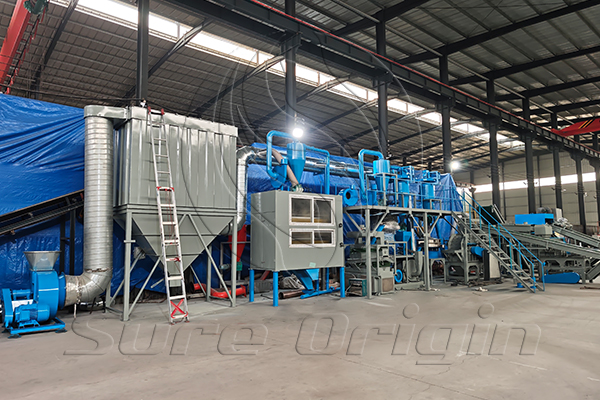
Before you stands our dedicated recycling production line, designed for the processing of single-glass photovoltaic modules. Today, I would like to walk you through the entire process, illustrating step by step how a decommissioned solar panel is disassembled, shredded, and ultimately separated into valuable, recyclable materials along this line.
The journey begins with a robotic arm positioned at the very start of the conveyor belt. It precisely lifts the solar panel and places it onto the line, initiating its path toward material recovery.
The conveyor first carries the panel into a multi-functional dismantling station. This machine is engineered to do more than simply remove the familiar aluminum frame; it also simultaneously detaches the junction box from the back sheet. This allows for the efficient recovery of these larger, easily separable metallic components right at the outset of the process.
With the frame and junction box removed, the main body of the panel advances to the critical separation stage: delamination. Our delamination machine utilizes electric heating, maintaining an internal temperature of approximately 200 degrees Celsius. As the panel passes through this heated zone, the glass layer loosens due to thermal stress and is effectively separated from the panel surface.
The separated glass fragments are then transferred via a small belt to a three-layer linear screen. The screens feature mesh sizes of 5mm, 3mm, and 1mm from top to bottom. This configuration allows the crushed glass to be precisely classified into three distinct size fractions, collected from separate outlets, thereby establishing a foundation for potential downstream applications or reprocessing.
After the glass is removed, the remaining back sheet portion of the panel exits from another outlet and continues its journey on the main conveyor toward the shredding stage. To ensure the downstream shredder operates efficiently, we position a set of blades at a specific point along the conveyor. These blades pre-cut the large back sheet into strips, preventing potential jams or uneven shredding caused by oversized pieces entering the machine.
Recognizing that customers may also have panels that bypassed the initial dismantling steps, or smaller, irregularly shaped modules, we have integrated a separate feed chute nearby. These materials can be introduced directly here, feeding conveniently into the main shredder.
The pre-processed panels ultimately enter the shredder, where they are reduced to pieces of approximately 5 centimeters in size. With the material now significantly reduced in volume and dimension, it is prepared for the subsequent, more refined separation stages.
The shredded material is then channeled into two parallel processing lines. The primary objective of each line is to maximize the recovery of valuable constituents, particularly silicon powder, from the heterogeneous mix. Each line first passes through a small linear vibrating screen, primarily intended to separate the initial fines, including a portion of the silicon powder.
In one of these lines, the pre-screened material proceeds to a small hammer mill for further crushing. This step helps liberate additional silicon particles that may still be adhering to other materials. The material subsequently passes through another linear screen to collect this newly released silicon powder.
Next, the material enters an eddy current separator. The panels processed on this line may not have undergone rigorous aluminum frame removal beforehand; consequently, the mixture can contain aluminum fragments and copper wires. The eddy current system effectively separates these non-ferrous metals (aluminum and copper) from the non-metallic fraction (such as plastics and residual silicon). While the output is a mixture of aluminum and copper, their distinct physical forms—aluminum typically as small flakes and copper as fine wires—allow for their straightforward separation using a simple screen.
The remaining material, after metal removal from this line, along with the output from the other line, now enters a large hammer mill for more intensive crushing and grinding. Following this stage, the material is fed into a three-layer rotary screen. This screen serves a dual purpose: classifying and recirculating. Oversized particles are returned to the mill for further grinding; the mid-sized fraction progresses to the next process; and the finest fraction collected at the bottom represents another yield of separated silicon powder.
At this juncture, most of the visible, easily separable silicon has been collected. However, the material stream still contains fine silicon particles intricately bound with plastic fragments. To achieve a final, clean separation, we employ a combination of air classification and high-voltage electrostatic separation. The air classifier first separates the lighter plastic flakes from the heavier mix of silicon and any residual metals. The final quality control step is performed by the high-voltage electrostatic separator. Leveraging the difference in electrical conductivity between silicon and plastic, this unit precisely separates the two materials, discharging them from two distinct outlets—one designated for silicon and the other for plastic.
It is also important to note the integrated pulse-jet dust collection system. It operates continuously throughout the entire process, ensuring the line runs cleanly and complies with environmental standards by effectively controlling dust at all key points.
By the end of this integrated production line, a discarded solar panel has been transformed and sorted into clean, recyclable material streams: glass, aluminum, copper, silicon powder, and plastics—all prepared and ready to re-enter the manufacturing cycle as valuable secondary raw materials.