English


Lead-acid batteries are one of the most widely used energy storage devices globally, and their recycling process involves a complex technological chain and stringent environmental requirements. Our factory's lead-acid battery recycling equipment has helped numerous clients establish and operate their systems, providing in-depth solutions to typical problems encountered during project implementation.
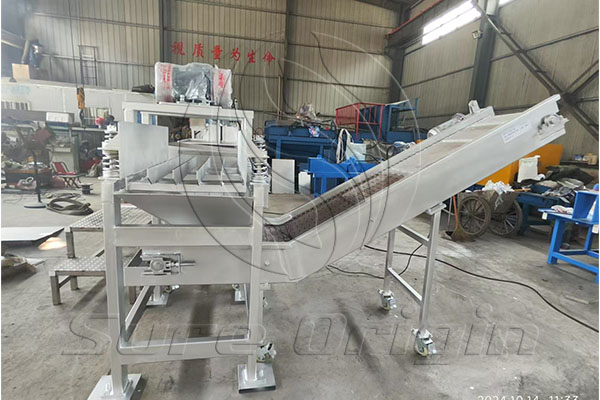
I. Equipment Setup: Modular Design and Compliance as Core
- Site Selection and Layout Principles
Environmental Isolation: The factory must be located away from residential areas and water sources, with impermeable ground and rainwater collection systems to prevent electrolyte leakage and contamination.
Functional Zoning: Divided into a pre-treatment area (crushing and sorting), a smelting area (lead recycling), a plastic recycling area, and an acid treatment area to avoid cross-contamination.
Expansion Reserve: Adopting a modular design, 20%-30% space is reserved for future capacity upgrades or technology iterations.
- Key Equipment Selection
Crushing System: Equipped with a dual-shaft shear crusher with a processing capacity of ≥5 tons/hour, ensuring complete separation of the battery casing and lead components.
Sorting Equipment:
Gravity Separator: Separates lead particles from plastic fragments based on density differences, with a sorting accuracy of over 95%.
Magnetic Separator: Removes ferrous impurities, protecting subsequent smelting equipment.
Eddy Current Separator: Recovers non-ferrous metals such as copper and aluminum, improving resource utilization.
Smelting Furnace: Employs side-blown furnaces or short kilns, equipped with bag filters and desulfurization towers to ensure lead recovery ≥98% and sulfur dioxide emissions ≤50mg/m³.
Automated Control System: Integrates PLC and SCADA systems to monitor parameters such as temperature, pressure, and material flow rate in real time, reducing human error.
II. Operation Process: Four-Step Closed-Loop Resource Regeneration
- Pre-treatment Stage
Discharge Treatment: Places waste batteries in a salt solution for complete discharge, eliminating safety risks caused by residual charge.
Crushing and Sorting: The crusher pulverizes the batteries into particles ≤50mm.
The plastic casing, lead grid, and electrolyte are separated by a vibrating screen and air separator.
- Acid Treatment: After neutralization, the acid solution is either discharged in compliance with standards or reused in production.
- Lead Recycling Stage:
Smelting and Reduction: Lead particles are fed into a smelting furnace with reducing agents (coke, iron filings) and reduced to crude lead at a high temperature of 1200-1300℃.
Refining and Purification: Impurities are removed through electrolysis or pyrometallurgical refining to produce 99.99% high-purity lead ingots for reuse by battery manufacturers.
- Plastic Recycling Stage: Cleaned polypropylene (PP) fragments are granulated using an extruder to produce recycled plastic granules for use in the production of new battery casings or industrial products.
- Tail Gas and Wastewater Treatment:
Tail Gas Treatment: Smelting exhaust gas is cooled, filtered through bag filters, and subjected to wet desulfurization before being discharged in compliance with standards.
Wastewater Recycling: Production water is treated using reverse osmosis membrane technology, achieving a reuse rate of ≥85% and reducing fresh water consumption.
III. Final Products and Sorting Efficiency
- Core Outputs
Recycled Lead: Purity ≥99.99%, conforming to GB/T 468-2019 standard, directly used in lead-acid battery plate manufacturing.
Recycled Plastics: PP granules meet melt flow index standards, capable of replacing 30%-50% of virgin plastics.
By-products: Sodium sulfate (electrolyte treatment product), iron slag (smelting waste), both can be recycled through third-party companies.
- Sorting Rate and Resource Utilization
Lead Sorting Rate: Recovery rate from waste batteries to crude lead ≥98%, overall resource utilization rate over 95%.
Plastic Sorting Rate: PP recovery rate ≥90%, impurity content ≤2%.
Acid Recovery Rate: Sulfuric acid recovery rate ≥85%, significantly reducing chemical procurement costs.
IV. Core Problems and Solutions Faced by Customers
- Technology Adaptability Issues
Pain Point: Indian customers generally lack experience in high-temperature smelting and waste gas treatment, leading to frequent equipment failures.
Solution: Provide a turnkey project + on-site guidance from a localized technical team to develop a smelting furnace control system adapted to India's fluctuating power supply.
- Environmental Compliance Pressure
Pain Point: India's CPCB has stricter lead emission standards (0.05mg/m³) than most developing countries, making it difficult for traditional processes to meet the requirements.
Solution: Introduce imported German bag filters and dual-alkali desulfurization towers to ensure real-time online connection of emission data to the regulatory platform.
- Insufficient Raw Material Stability
Pain Point: The lead content of waste batteries supplied through informal recycling channels fluctuates greatly (15%-25%), affecting smelting efficiency.
Solution: Establish a "trade-in" incentive mechanism and sign long-term agreements with car dealerships and UPS suppliers to lock in high-lead-content waste.
- Long Cost Recovery Cycle
Pain Point: Formal recycling costs are 30%-40% higher than informal channels, with a customer investment payback period exceeding 5 years. Solution: Assist in applying for subsidies under the Indian government's Production Linked Incentive (PLI) scheme to develop high-value-added products (such as lead alloys and modified plastics).